




.png?width=250&name=OrderEase%20logo%2c%20Square%20(2).png)
.png?height=290&name=Untitled%20design%20(36).png)

On this page
- B2B eCommerce for manufacturers isn't optional anymore. 75% of B2B buyers want to place orders without a sales rep.
- The right platform needs ERP integration, custom pricing by account, and multichannel order management — not just a storefront.
- Top contenders are OrderEase (best for manufacturers), Shopify Plus (best hybrid DTC/B2B), and BigCommerce (best mid-market B2B features).
- Implementation costs vary wildly — budget for data migration, integrations, and team training alongside the platform fee.
- ROI is real but takes 6-12 months; calculate it using labor savings, new sales channel revenue, and error reduction to justify the investment.
E-commerce for manufacturers is a natural evolution in a well diversified order management strategy, but choosing the wrong B2B eCommerce solution for manufacturers can create costly inefficiencies from manual order entry and disconnected systems to missed sales opportunities.
This guide is designed for eCommerce manufacturers who want to cut through the noise and find a solution built for real B2B needs.
The Importance of eCommerce for Manufacturers
B2B E-commerce for manufacturers involves selling products online, directly to businesses (B2B). For decades, manufacturers relied on trade shows, phone orders, and distribution networks to reach customers. But, in 2026, B2B buyers expect the convenience of the digital-first, B2C-influenced shopping experience, paired with the negotiated, personalized relationships of business-to-business transactions. According to Gartner, 75% of buyers want to place orders without having to go through a sales rep.
That’s why leading manufacturers are adopting B2B eCommerce, and not as an add-on website, but as a new operational backbone for how they sell to distributors, retailers, and business accounts.
B2B eCommerce Amplifies Sales Reps
B2B eCommerce frees up sales reps to focus on higher-value relationships. Instead of rekeying orders or chasing stock updates, reps have more time to build relationships that last.
Improved Trading Partner Relationships
When everyone has access to accurate product availability, pricing, and order status, it eliminates confusion and delays.
Streamlined Order Processing
One of the biggest benefits of B2B eCommerce is operational: it automates the flow of data into your ERP (think NetSuite eCommerce connectors).
For many manufacturers, it’s the first step toward a modern Order Management System (OMS) strategy.
What Is a B2B eCommerce Platform?
A B2B eCommerce platform is an online catalog built specifically for business-to-business transactions. Unlike B2C tools adapted for wholesale, B2B eCommerce platforms are built to handle complex order rules while syncing directly with back-end systems like NetSuite or QuickBooks.
B2B eCommerce platforms are private, digital storefronts where your buyers can browse your catalogs, and place orders.
Here's an example of a customer's view of a branded B2B site using the OrderEase portal: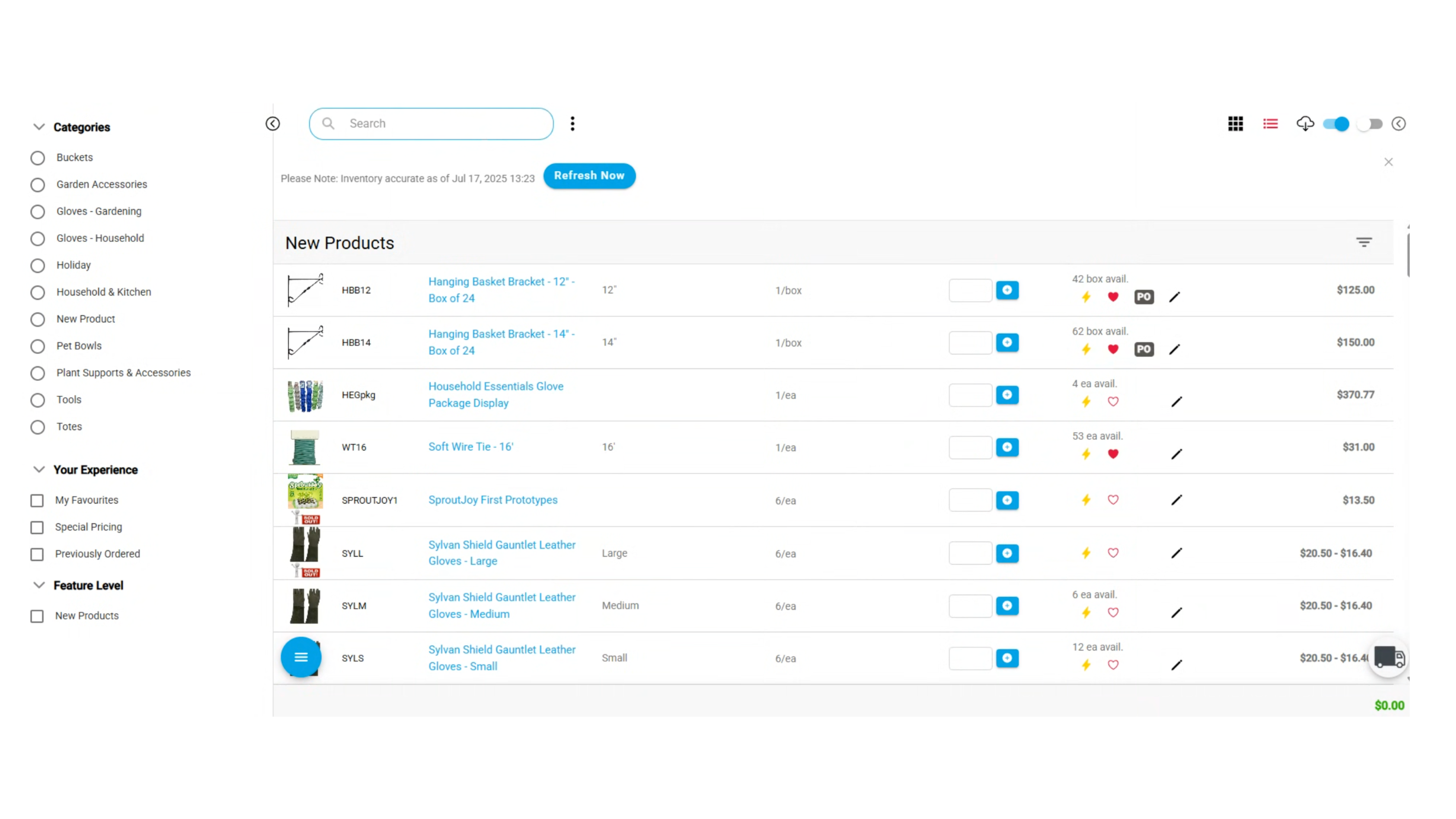
Who Are the Customers of B2B E-Commerce?
The “customers” in B2B eCommerce are typically organizations.
Examples include:
- Large retail chains ordering from multiple suppliers
- Independent retailers buying seasonal or specialty stock
- Wholesalers consolidating orders from manufacturers
Why B2B eCommerce Works Differently for Manufacturers
Unlike traditional retail eCommerce, B2B eCommerce for manufacturers involves complex, high-value relationships. Manufacturers have to balance negotiated B2B rates and multi-channel sales while maintaining accuracy everywhere they sell.
Where most eCommerce platforms focus on product listings and payment gateways, manufacturers need systems that integrate deeply with ERP and production workflows. If your eCommerce platform doesn’t mirror that complexity, you risk stockouts, duplicate orders, and costly manual work.
A purpose-built B2B eCommerce solution for manufacturers supports negotiated pricing, real-time inventory visibility, and seamless data flow between eCommerce, ERP, and fulfilment.
How B2B eCommerce Helps Manufacturers Scale
B2B eCommerce for manufacturers enables growth by automating order workflows, connecting sales channels, and giving customers self-serve access products.
With a modern B2B eCommerce platform, manufacturers can:
-
Digitize and standardize how orders flow from customers to ERP and fulfillment
-
Serve more customers and channels without adding headcount.
-
Use customer-specific pricing, catalogs, and order history to strengthen relationships
-
Gain real-time insights into inventory, production, and demand
Instead of relying on phone calls, spreadsheets, or disconnected portals, B2B eCommerce helps manufacturers scale by turning operational complexity into a competitive advantage.
What Manufacturers Should Look for in a B2B eCommerce Solution
The right B2B eCommerce software doesn’t just manage order intake; it unifies sales operations. Beyond basic functionality like catalog management, it should deliver the control needed to manage complex B2B relationships at scale.
Advanced Pricing Structures
-1.png?width=588&height=383&name=EDI%20(5)-1.png)
In B2B eCommerce, pricing is customer specific, changing based on negotiated contracts and seasonal deals.
Your platform should allow you to:
- Set tiered pricing for volume discounts
- Offer customer-specific pricing
- Handle contract pricing that applies automatically at checkout
Customizable Catalogs
In B2B, your catalog isn’t just a product list. It should reflect negotiated relationships. Your B2B buyers expect to log in and see exactly what applies to them, with the right pricing and relevant products.
A strong B2B eCommerce platform should let you:
- Control product visibility so each buyer sees only the SKUs they’re authorized to purchase.
- Apply customer-specific pricing that automatically reflects negotiated contracts or tiered discounts.
Seamless integration
Integration with your ERP is a non-negotiable; it ensures that everything in your B2B catalog is accurate. OrderEase, for example, integrates ERPs with all channels. This means that your ERP/inventory is directly connected to your eCommerce sales.
This means you can have:
- A B2C storefront with simple pricing structures
- A B2B, wholesale portal for negotiated, complex pricing
- And a fully integrated ERP
Automation should be built into your B2B eCommerce platform to replace the manual steps that slow teams down. Instead of having to respond to orders via email or phone, a B2B eCommerce platform empowers customers to place their own orders, automating wholesale buying experiences.
Your B2B eCommerce platform should align with both your operational goals and the needs of your customers. The right platform will give you a single, integrated portal to manage every order.
Benefits of Using a B2B eCommerce Platform
Implementing a modern B2B commerce platform can fundamentally change your omnichannel growth strategy.
The right platform provides an operational backbone that connects your channels, customers, and ERP into one unified workflow without your team having to get involved.
Here are the top benefits operational leaders find in using B2B eCommerce platforms:
1. Efficiency and Cost Savings
In traditional B2B operations, margins are lost to time spent on low-value, manual tasks like rekeying orders from emails into ERP systems and processing payments through disconnected systems.
A B2B commerce platform automates these steps so that orders placed, whether on an eCommerce website or B2B portal, flow directly into your ERP.
In platforms like OrderEase, this automation extends to EDI transactions, marketplace sales, and even rep orders.
2. Improved Data-Driven Decisions
Many B2B companies still operate with data in silos across departments and channels, making decisions based on partial or outdated information.
A modern B2B eCommerce platform syncs data from across all sales channels with your back-end systems (ERP/accounting), for one source of truth.
Example: By seeing that a specific product is close to selling out, a business can adjust inventory and reduce stockouts.
3. Enhanced Customer Satisfaction
B2B buyers expect the same level of digital convenience they get from consumer shopping with the added complexity of bulk ordering and terms. A robust B2B commerce platform delivers this by giving customers self-service access to personalized catalogs, contract-specific pricing, real-time stock levels, and easy reordering tools.
This shift from manual, rep-driven order placement to a customer-controlled digital experience not only speeds up transactions but also empowers buyers to interact with your brand on their own terms.
While in-person calls are still valuable for deepening partner relationships, B2B eCommerce allows much of the buying process to happen on the buyer’s schedule.
This doesn’t completely replace in-person selling; it means sales calls can focus on growth opportunities instead of order taking.
4. Scalability for Growth
Growth often exposes the limits of using B2C systems in B2B operations. Without the right B2B eCommerce strategy, every new channel or product means adding more overhead, manual processes, and risk.
An eCommerce platform that’s purpose-built for B2B allows you to grow without adding in workarounds just to manage your catalog and pricing. When you have a fully integrated order ecosystem, adding a new channel comes with a preconfigured flow that delivers ROI instantly.
Before You Commit: Cost, ROI, and Time-to-Value
Even the most feature-rich B2B eCommerce platform can fail to deliver if you overlook the bigger picture of cost and implementation timelines.
Think beyond the subscription fee for additional costs, including:
- Data migration, system integrations, and any custom development.
- The time required to train your internal teams.
- Time to launch can take months to years with certain B2B eCommerce platforms
- Consider the cost of scaling to new markets or channels.
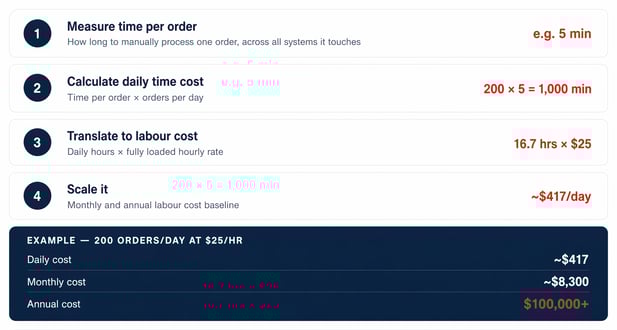
Quick ROI Formula for a B2B eCommerce Platform
To estimate your potential return, use:
ROI (%) = ((Annual Benefits – Annual Costs) ÷ Annual Costs) × 100
Annual Benefits can include:
- Labor savings from reduced manual processing
- Increased sales from expanded channels
- Fewer errors and related cost savings
- Faster order-to-cash cycles that improve cash flow
Annual Costs should factor in:
- Platform subscription
- Implementation and integration costs
- Ongoing support fees
Example:
If your B2B eCommerce platform saves $150,000 annually in labor and error reduction, adds $100,000 in new sales, and costs $80,000 per year in total, your ROI is:
ROI = (($250,000 – $80,000) ÷ $80,000) × 100 = 212.5%
Best B2B eCommerce Platforms for Manufacturers in 2026
OrderEase – B2B Order Management
-1.png?width=868&height=434&name=Untitled%20design%20(38)-1.png)
What it is: A B2B Order Management System that unifies all your order channels (marketplaces, eCommerce sites, portals, and sales reps), into one automated workflow. It provides a branded portal to digitize sales with independent retailers while automating channels, big box store sales and more with your back-end systems. Orders from wherever and whenever flow in one unified ecosystem
Why it shines: True multichannel integration, standardized order data, and direct ERP syncing mean fewer errors, less manual work, and one source of truth across sales.
.png?width=543&height=305&name=Order%20Management%20Software%20(6).png)
Pros:
- B2B portal built for B2B with complex pricing tiers and custom catalog assignment
- Multichannel connectivity
- ERP-first architecture means no middleware/iPaaS required
- No development teams are requires for setup
- Standardized order data eliminates manual entry and errors
- Handles both online and offline orders in one system
Cons:
- Less emphasis on DTC marketing tools
- Requires ERP integration to unlock full potential
Shopify Plus
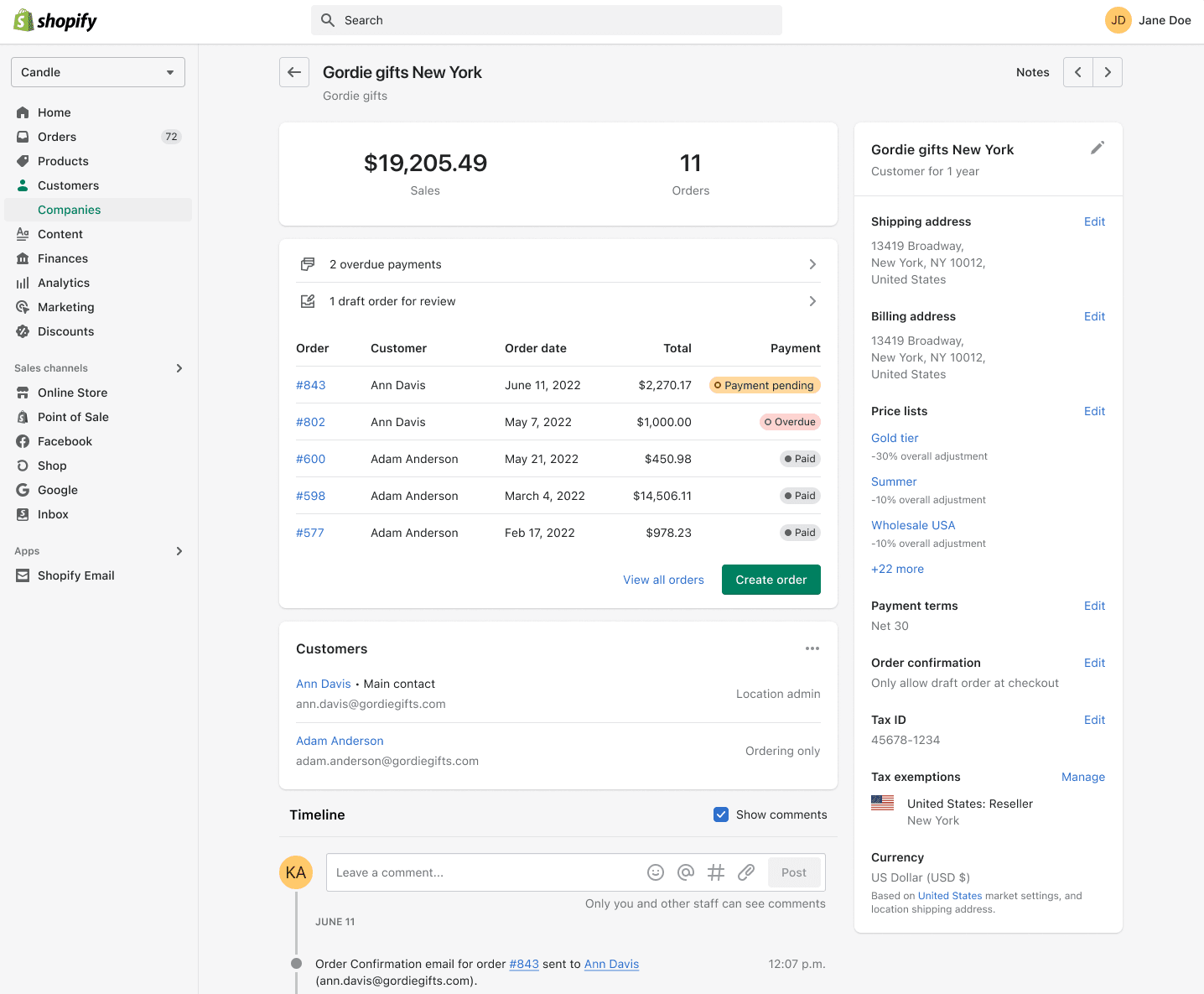
What it is: The enterprise-grade version of Shopify, offering a scalable platform to both consumers and businesses. With Shopify Plus, B2B features can be added through native tools, custom APIs, or apps from its massive ecosystem.
Why it shines: Shopify Plus is ideal for brands that need to blend DTC and B2B sales in a single platform.
Pros:
- Extremely user-friendly backend and storefront
- Large app ecosystem for extending B2B functionality
- Scalable infrastructure with global hosting
Cons:
- Requires apps or custom dev for B2B workflows
- Wholesale pricing logic can be cumbersome
Commerce (formerly BigCommerce)
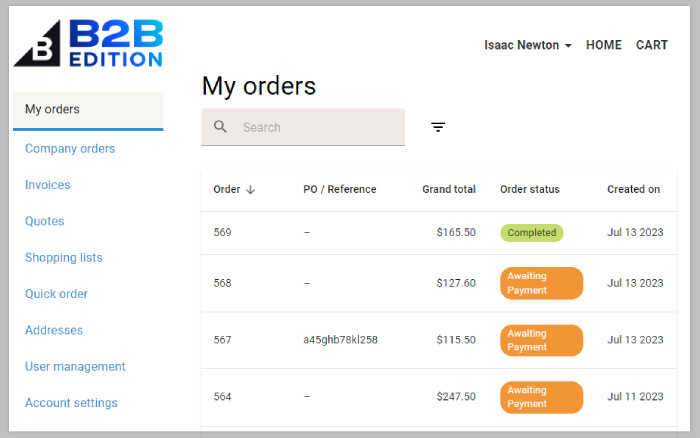
What it is: Recently rebranded from BigCommerce (August 2025), Commerce brings together BigCommerce, Feedonomics, and Makeswift into a unified AI-driven commerce brand. The B2B Edition includes buyer portals, company accounts, quoting, invoice portals, multi-storefront, and ERP integrations.
Why it shines: Excellent blend of native B2B features and open APIs for businesses that want customization.
Pros:
- Strong B2B feature set
- Open APIs for ERP and CRM integration
- Multi-storefront capabilities
Cons:
- Can feel more like a DTC platform with B2B bolted on for highly complex B2B operations
- Some advanced workflows still need development
WooCommerce for B2B
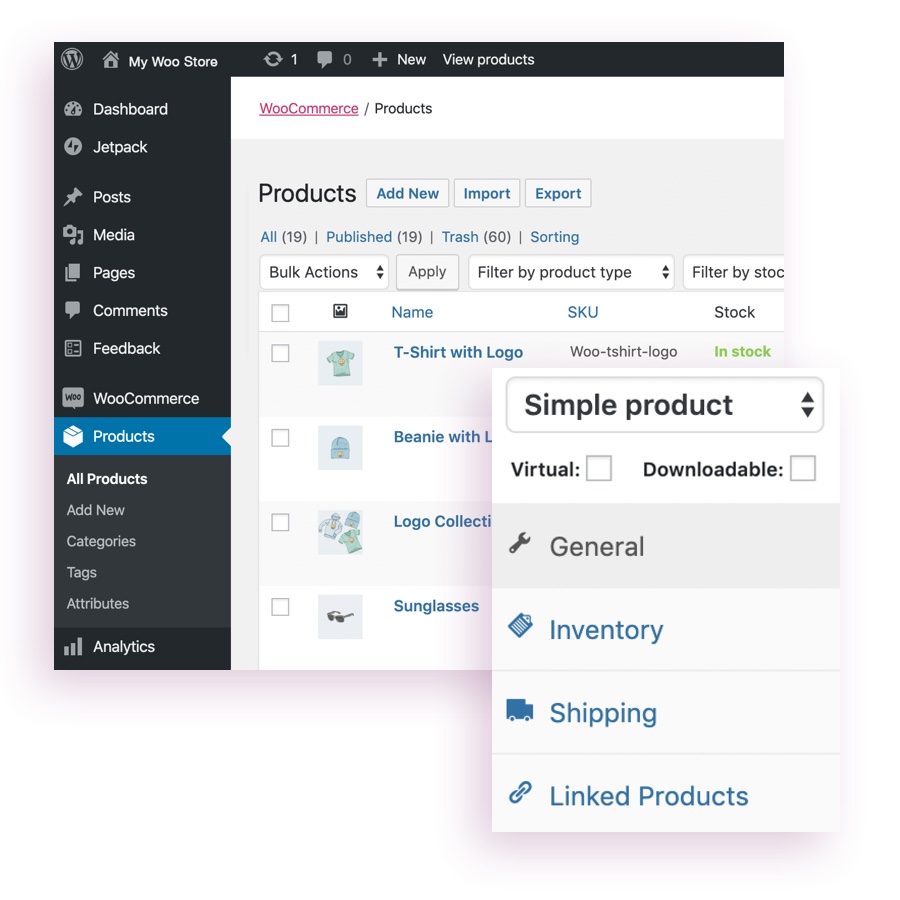
What it is: A WordPress-based eCommerce platform extended with B2B plugins for wholesale capabilities.
Pros:
- Cost-effective and open-source flexibility
- Huge plugin ecosystem
- Easy to customize for smaller catalogs
Cons:
- Needs frequent plugin updates and security monitoring
- Can be difficult to scale
- Hosting and performance depend on your setup
Pepperi
What it is: A mobile-first platform designed for B2B field sales enablement with digital catalogs and mobile order-taking.
Pros:

- Excellent mobile UX with offline access
- Dynamic product catalogs for sales reps
Cons:
- Not a full-featured eCommerce storefront
- Limited customization for unique workflows
- Best suited for sales-rep-led models
Which ecommerce platform is best for B2B?
|
Platform |
Best For |
Integration |
Scalability |
Customization |
Key Watchout |
|
OrderEase |
Suppliers, distributors & manufacturers |
★★★★★ |
★★★★★ |
★★★★☆ |
Requires ERP connection for full value |
|
Shopify Plus |
Blending DTC & B2B sales |
★★★☆☆ |
★★★★☆ |
★★★☆☆ |
Limited native B2B features |
|
Commerce (formerly BigCommerce) |
Mid-to-enterprise B2B brands |
★★★★☆ |
★★★★☆ |
★★★★☆ |
Pricing not transparent |
|
WooCommerce B2B |
SMBs on WordPress |
★★★☆☆ |
★★★☆☆ |
★★★★☆ |
Needs regular plugin/security upkeep |
|
Pepperi |
Field sales–driven businesses |
★★★☆☆ |
★★★☆☆ |
★★★☆☆ |
Not a full storefront |
Does B2B eCommerce Replace Sales Teams?
The short answer is no; a well-implemented B2B eCommerce platform makes your sales team more valuable. It takes away the entry-level tasks so they can focus on negotiating contracts and building trust. Those are things technology can’t replace.
B2B eCommerce automates tasks like:
- Taking orders by phone or email
- Confirming inventory and pricing via email or text
- Entering orders into ERP or accounting systems
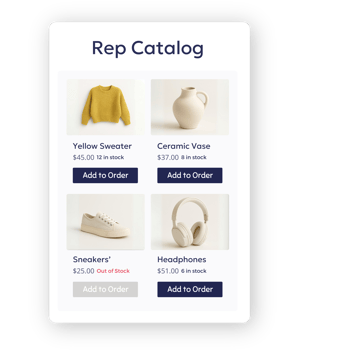
The shift is from order-taking to opportunity-making. Instead of spending time with back-and-forth emails, your team can spend time having the conversations that move the relationship forward.
In practice, this means faster order processing and a sales team that’s laser-focused on growth.
B2B eCommerce doesn’t eliminate your sales team; it turns their day-to-day into a more impactful growth-driving role.
How Do B2B Sales Teams Win with Digital Commerce?
Even when you have a fully automated digital catalog, some customers want to stick to what they know and order through their trusted sales rep.
.png?width=358&height=358&name=Sales%20Rep%20App%20%20(1).png)
B2B sales teams thrive when their tools remove friction instead of creating it. A B2B platform where the sales rep app uses the same dashboard as the customer portal keeps everyone working from the same source of truth.
With this setup, sales reps can:
- Close deals faster by having real-time product availability and pricing
- Access complete account history instantly
- Streamline reorders for existing customers
Frequently Asked Questions About B2B eCommerce Platforms
Choosing the right B2B eCommerce platform can be complicated, especially with so many options and technical considerations.
What distinguishes a B2B eCommerce platform from a B2C one?
B2B platforms are designed for business transactions that involve higher order values, more complex pricing, and longer buying cycles. B2C platforms prioritize quick, one-time purchases, while B2B platforms focus on long-term account relationships.
How important is integration capability?
Integration is critical. A strong B2B eCommerce platform integrates directly with ERP, marketplaces, and EDI portals. Platforms like OrderEase use an ERP-first approach so commerce operations work off a single source of truth.
Can I use Shopify for B2B?
Yes. Shopify Plus can work for B2B eCommerce, but consider adding extra budget for third-party apps and custom development to make things like B2B pricing tiers work properly.
What eCommerce is better than Shopify?
“Better” depends on your business requirements. Shopify excels in user experience and ability to launch your storefront quickly, but if you need deep ERP integration, multi-channel wholesale, or advanced catalog management, platforms like OrderEase, Adobe Commerce, or OroCommerce may be more suitable.
How much does a B2B platform cost?
Pricing varies from a few hundred dollars a month to six-figure enterprise implementations.
Costs depend on:
- Licensing or subscription fees
- Required integrations
- Custom development
- Ongoing support and hosting
What is the best B2B eCommerce platform for manufacturers?
The best B2B eCommerce platform for manufacturers depends on how complex your order operations are. For companies managing large catalogs, distributor relationships, and ERP integrations, solutions like OrderEase streamline B2B workflows from order entry through fulfillment. Platforms like Shopify Plus and BigCommerce can work well for hybrid DTC and B2B sales but often require middleware or custom apps to match manufacturing needs.
How is eCommerce different for manufacturers compared to distributors or retailers?
Manufacturers sell in higher volumes, with more pricing tiers, longer buying cycles, and complex fulfillment rules. A manufacturer-focused eCommerce platform must support custom pricing, bulk ordering, ERP integration, and partner ordering portals which are capabilities traditional retail platforms often lack.
Why should manufacturers invest in a B2B eCommerce platform?
Modern buyers expect digital purchasing experiences. A B2B eCommerce platform helps manufacturers reduce manual order entry, improve accuracy, and connect eCommerce directly with ERP systems. The result is fewer errors, faster fulfillment, and better visibility across all sales channels.
Can manufacturers use Shopify or BigCommerce for B2B eCommerce?
Yes, but with limitations. Shopify Plus and BigCommerce can handle B2B sales with add-ons, but they’re built primarily for retail. Manufacturers that need deep ERP integration or order automation typically use platforms designed for wholesale and manufacturing operations, like OrderEase.
How do B2B eCommerce platforms integrate with ERP systems?
Most modern solutions use APIs or EDI to sync order, inventory, and pricing data with your ERP. OrderEase takes this further by acting as a system of action, standardizing every order, regardless of channel, before syncing it cleanly into your ERP for full visibility.
Final Thoughts: Finding the Best Fit for Your Business
Selecting the ideal B2B eCommerce platform is an investment in how your business will serve customers and grow over the coming years.
Look for a platform that integrates seamlessly with your core systems, automates time-consuming tasks, and can scale as sales expand. In the end, the best B2B eCommerce platform will feel less like another tool and more like an extension of your business.
.png?width=50&height=50&name=OrderEase%20logo%2c%20Square%20(2).png)
OrderEase connects your eCommerce, marketplaces, and ERP into one unified system built for manufacturers.
Book a demo to see how we can help you automate orders and scale smarter.
Frequently Asked Questions About B2B eCommerce Platforms for Manufacturers
Meet the author