


<img src="https://certify.alexametrics.com/atrk.gif?account=knr3r1xk/v20jL" style="display:none" height="1" width="1" alt="">
Skip to content

OrderEase vs.

Marketplace-First OMS

B2B Order Operations Don’t Fit Inside Consumer Channel Tools.

Considering an OMS to support B2B order operations?

Marketplace-first OMS are designed around consumer marketplaces and carts. They don’t natively handle B2B inputs like EDI, email-based POs, or document-driven orders.  OrderEase treats consumer channels as just one input, not the operating model. It’s built for end-to-end order operations, standardizing orders across every source, applying customer-specific rules, and managing exceptions before orders ever reach the ERP.


Connect every channel and system with preconfigured integrations.
NetSuite logo, OrderEase Order Automation
Shopify - Horizontal Logo Resize
Walmart Marketplace (1)
UPS Logo - Horizontal
Rona Logo
QuickBooks logo
Wayfair Horizontal Logo
Costco logo
Best Buy Logo-1
Lowes Logo 500 x 150
WOO Commerce 500x150
SAGE 50 Logo
Shipwise logo
Kerridge  500x150
NetSuite logo, OrderEase Order Automation
Shopify - Horizontal Logo Resize
Walmart Marketplace (1)
UPS Logo - Horizontal
Rona Logo
QuickBooks logo
Wayfair Horizontal Logo
Costco logo
Best Buy Logo-1
Lowes Logo 500 x 150
WOO Commerce 500x150
SAGE 50 Logo
Shipwise logo
Kerridge  500x150
NetSuite logo, OrderEase Order Automation
Shopify - Horizontal Logo Resize
Walmart Marketplace (1)
UPS Logo - Horizontal
Rona Logo
QuickBooks logo
Wayfair Horizontal Logo
Costco logo
Best Buy Logo-1
Lowes Logo 500 x 150
WOO Commerce 500x150
SAGE 50 Logo
Shipwise logo
Kerridge  500x150
NetSuite logo, OrderEase Order Automation
Shopify - Horizontal Logo Resize
Walmart Marketplace (1)
UPS Logo - Horizontal
Rona Logo
QuickBooks logo
Wayfair Horizontal Logo
Costco logo
Best Buy Logo-1
Lowes Logo 500 x 150
WOO Commerce 500x150
SAGE 50 Logo
Shipwise logo
Kerridge  500x150
NetSuite logo, OrderEase Order Automation
Shopify - Horizontal Logo Resize
Walmart Marketplace (1)
UPS Logo - Horizontal
Rona Logo
QuickBooks logo
Wayfair Horizontal Logo
Costco logo
Best Buy Logo-1
Lowes Logo 500 x 150
WOO Commerce 500x150
SAGE 50 Logo
Shipwise logo
Kerridge  500x150

How OrderEase Compares to Manual Order Processing

Instead of relying on people to interpret emails, rekey PDFs, validate spreadsheets, and fix errors after entry, OrderEase standardizes orders upstream, applies rules and validation automatically, and only commits clean, structured data to your accounting system or ERP. Operations move faster, errors drop, and scaling no longer requires more headcount.

How OrderEase Compares to Marketplace-First OMS

Marketplace-first OMS platforms optimize for throughput: ingest the order, pass it downstream, move on. That works when order structure is consistent and variation is low. In B2B, variability is the norm. OrderEase standardizes orders before they reach the ERP, enforces customer-specific rules consistently, and gives operations teams a single system to manage exceptions.

OrderEase
Marketplace-First OMS
Features & Benefits
Core operating model
B2B order operations as a system of action
Consumer marketplace order flow
Assumed order structure
Variable by customer and channel
Standardized, low-variance
B2B order inputs
Native support for EDI, email POs, documents, portals
Not designed for document-driven B2B orders
Consumer channels
Supported as one input
Primary focus
Customer-specific rules
Centralized and enforced consistently
Handled manually or via ERP logic
B2B scalability
Complexity absorbed by the system
Complexity grows with volume
Support for non-cart orders
Native support for POs and documents
Assumes cart-based orders
Order structure variability
Expected and normalized
Assumed to be consistent

5× more B2B channels supported
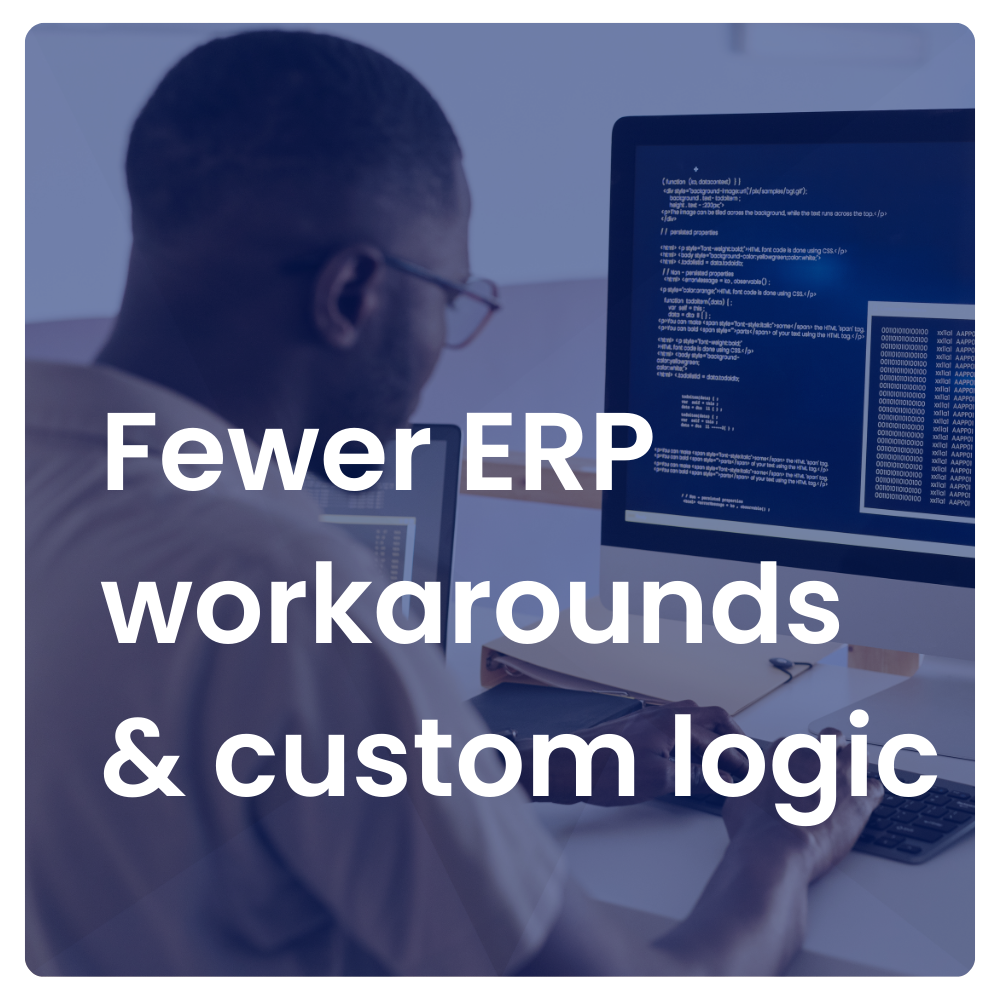
Fewer ERP workarounds & custom logic
50%  faster b2b  customer onboarding

Why Teams Choose OrderEase

Teams choose OrderEase when marketplace-first systems start showing their limits. What works for consumer channels breaks for B2B orders. Instead of layering workarounds or pushing complexity into the ERP, teams adopt OrderEase to run B2B order operations the way they actually work.

 

3dmodel 50x50 icon of a b2b website portal use 585de6 but no background

Preconfigured for Real-World Orders

Ingests orders from email, PDFs, CSVs, portals, reps, and EDI

Standardizes inconsistent formats into structured orders automatically

Apply consistent rules across every order source

sales rep iphone icon in 585de6 no background

Less Manual Work for Operations Teams

Remove manual rekeying into the ERP

Reduce time spent reviewing, correcting, and chasing errors

Free teams to focus on exceptions—not every order

link integration icon in 585de6 no background-1

Cleaner, More Reliable ERP Data

Validate orders before they reach the ERP

 Enforce pricing, terms, and customer-specific rules consistently

Protect ERP stability as order volume and complexity grow
purchase order icon in 585de6 no background

Operations Become Scalable

Resolve exceptions at the order level

Adjust rules and workflows without developer help

Move faster without relying on tribal knowledge


See the ROI of Automating Orders with OrderEase

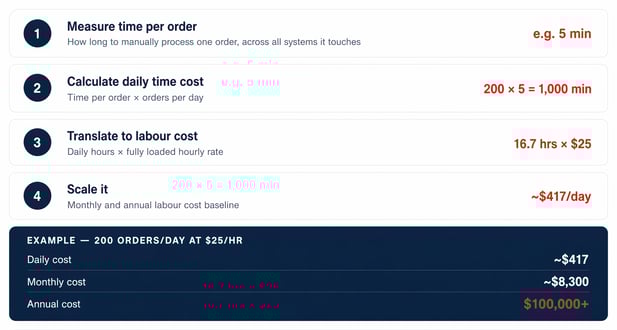
Manual order entry, disconnected systems, and error-prone workflows quietly drain time and margin. The OrderEase Automation ROI Calculator helps you quantify what you could save by standardizing and automating B2B orders across every channel.

ROI of OrderEase being calculated by ops manager


See How OrderEase Fits Into Your Tech Stack

OrderEase is designed to integrate cleanly with your ERP and order channels without the custom builds or long-term maintenance overhead. Explore how OrderEase simplifies B2B order operations.

OrderEase integrated tech stack