


<img src="https://certify.alexametrics.com/atrk.gif?account=knr3r1xk/v20jL" style="display:none" height="1" width="1" alt="">
Skip to content
Shopify Order Management System | OrderEase

Shopify Order Management System

Automate & Scale Your Orders | Built for Shopify & Shopify Plus 


Tired of juggling Shopify orders across spreadsheets and siloed apps? OrderEase transforms Shopify into a fully connected order management system built for growing businesses. We bridge the gap between your Shopify storefront and your back-end operations so you can scale faster with fewer errors and less manual work. 

Is Shopify an Order Management System?

Shopify offers sellers a powerful dashboard for order intake, fulfillment, and returns. But as your operations grow, multiple channels, wholesale customers, ERP integrations, you need more than a storefront tool. OrderEase turns Shopify into your source of truth, orchestrating every order across your business.

Shopify Order Management System | OrderEase
Why Scaling Shopify Sellers Choose OrderEase

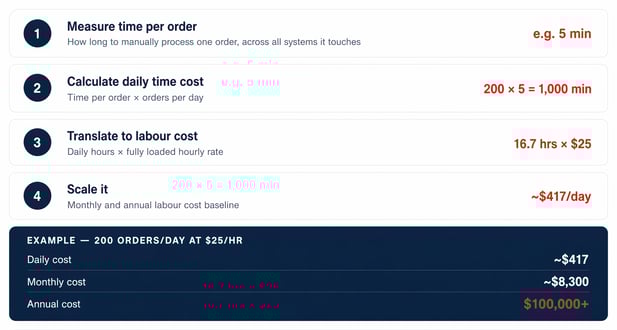
The Hidden Costs of Managing Shopify Orders Manually

Shopify is excellent for capturing online orders and running your storefront. Yet as operations grow complex, hidden inefficiencies start to surface. Shopify’s built-in order management covers the basics, but it wasn’t designed for advanced workflows, multi-warehouse fulfillment, or enterprise system integration. Here are the costly pain points that Shopify and Shopify Plus sellers face when relying on manual processes or patchwork apps:

Stockouts and Overselling

Stockouts and Overselling

Running out of stock or overselling items can lead to cancelled orders and unhappy customers. Without real-time inventory sync, a sales surge on Shopify can lead to overselling, backorders, and refunds, damaging your reputation. Inaccurate inventory tracking costs retailers billions across multiple channels.

Slow, Error-Prone Processes

Slow, Error-Prone Processes

Manual data entry and double-checking are productivity drains for your team. Transferring order details from Shopify to spreadsheets or ERP systems can lead to typos and errors. As order volume increases, these slow processes become unmanageable, leading to shipping delays and additional overtime costs on busy days.

Multi-Channel Mayhem

Multi-Channel Mayhem

Selling on platforms beyond Shopify? If you're also taking orders on Amazon, Costco, or through wholesale, managing these separately can be a challenge. Team members may be swamped navigating multiple tools, leading to missed orders, outdated inventory, and scattered performance data. 

Proven Impact: By the Numbers

Businesses that implemented OrderEase to Shopify have seen immediate, tangible improvements in their operations:
95%+ Reduction in order entry mistakes
37hours Saved per month from manual processing
10x Faster order processing & fulfillment

Enterprise-Grade Shopify Order Management System with OrderEase

OrderEase is the Shopify order management upgrade for merchants who are ready to move from piecemeal processes to a unified, automated workflow. It’s purpose-built to handle operational complexity as you scale – the things Shopify can’t do out-of-the-box.

One Platform for All Orders

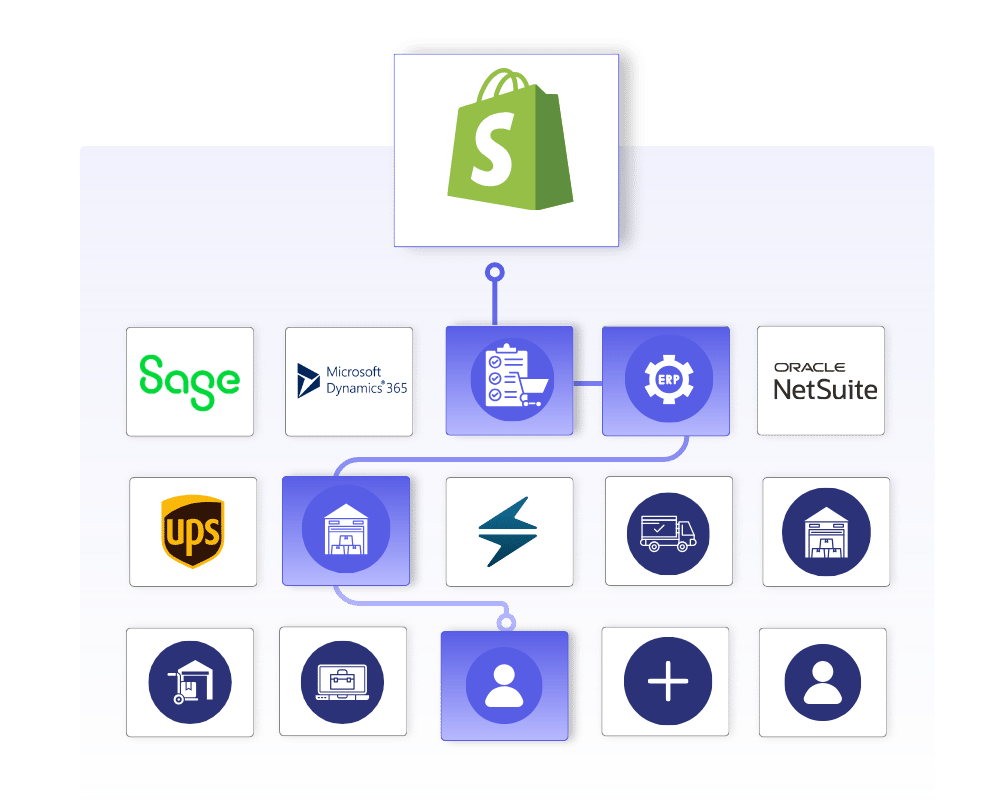
Connect your Shopify store with all your sales channels and backend systems in one place. OrderEase pulls in orders from Shopify and other sources like marketplaces or B2B portals into a single dashboard for easy management. No more logging into multiple apps or copying data between systems.

Real-Time Inventory Sync

Prevent overselling and stockouts with automatic inventory updates across channels. The moment an item is sold or updated, stock levels adjust everywhere, in Shopify, your warehouses, and even other online marketplaces.

ERP, Accounting & Warehouse Integration

Bridge Shopify to the rest of your business. OrderEase connects directly with your ERP, accounting software, warehouse management system (WMS), or any other critical back-end tool. The moment an order comes in, OrderEase pushes the data into your ERP/accounting system , bringing along all the customer details, items, quantities, and prices without anyone re-keying it. 

 Automated Order Routing & Splitting

Speed up fulfillment by automating where each order goes. With OrderEase, every Shopify order can follow custom business rules that you define. There’s no need for manual intervention or complex export/import routines. OrderEase essentially adds an “order brain” to Shopify, ensuring each order is sent to the optimal fulfillment location immediately. The result is faster shipping times and no human error in deciding who fulfills what.

 Always in Sync (Two-Way Updates)

With OrderEase, Shopify stays up-to-date with every status change. As orders are processed and shipped, tracking info and status updates flow back into Shopify in real time. Your customers can receive timely shipping notifications from Shopify, and your team can see accurate fulfillment status without manual updates. No more jumping between Shopify and emails or losing track of an order’s stage. 

B2B & Custom Pricing Flexibility

Unlike one-size-fits-all apps, OrderEase is built with B2B and advanced scenarios in mind. You can apply customer-specific pricing or wholesale discounts automatically before orders hit fulfillment. OrderEase has you covered with flexible rules and formats. This means you can serve retail customers and wholesale clients from the same Shopify store without breaking your workflows.

 Ease of Use for Your Team

Despite its power, OrderEase is designed for non-technical users. Your operations and warehouse teams get a clean, easy interface to monitor and manage orders, or they can work directly out of your ERP if they prefer. Automation runs in the background so that even a lean team can handle 24× the order volume with confidence. Fewer clicks and checks, more getting stuff done.

OrderEase turns Shopify into a robust order management system that grows with you. It gives you the automation and advanced capabilities of an enterprise OMS, without the headache. You’ll save time, reduce errors, and be able to focus on growth instead of firefighting operations.

Built for Shopify Plus

Scale Without Limits

If you’re a Shopify Plus merchant aiming for enterprise-level efficiency and scale, OrderEase was designed for you.  Shopify Plus merchants often operate multiple stores across different regions, brands, and B2B vs. B2C, and deal with complex workflows. OrderEase is built to handle multi-store, multi-location environments with ease. Whether you have one Shopify store or ten, OrderEase consolidates all your orders and inventory into a unified system. Use Shopify Plus’s advanced features on the front-end, while OrderEase handles the heavy operational logic on the back-end. The integration is direct and robust, even as you add more stores, warehouses, or new sales channels. OrderEase ensures no order falls through the cracks and no data gets out of sync. 


OrderEase dashboard showing integrations and order status with pre-configured mapping
Shopify Logo on the OrderEase, Shopify order management system integration page
NetSuite logo displayed on a page about Shopify order management by OrderEase

Amazon

Shopify orders. In NetSuite.

Blue Link logo displayed on a page about Shopify order management by OrderEase

Blue Link

Shopify Orders. In Blue Link.

Sage 300 logo displayed on a page about Shopify order management by OrderEase

Sage 300

Shopify Orders. In Sage 300.

Sage 50 logo on the Amazon order management page by OrderEase

Sage 50

Shopify Orders. In Sage 50.

QuickBooks logo  on the Amazon order management page by OrderEase

QuickBooks Online

Shopify Orders. In QuickBooks.

QuickBooks Enterprise logo  on the Amazon order management page by OrderEase

QuickBooks Enterprise

Shopify Orders. In QuickBooks.

Microsoft Dynamics GP logo  on the Amazon order management page by OrderEase

Microsoft Dynamics GP

Shopify orders. In GP.

Odoo logo on the Amazon order management page by OrderEase

Odoo

Shopify Orders. In Odoo.

Acumatica logo on the Amazon order management page by OrderEase

Acumatica

Shopify Orders. In Acumatica. 

Xero logo on  on the Amazon order management page by OrderEase

Xero

Shopify Orders. In Xero.

Infor logo on the Amazon order management page by OrderEase

Infor

Shopify Orders. In Infor.
Zoho logo  on the Amazon order management page by OrderEase

Zoho

Shopify Orders. In Zoho.
ShipStation logo  on the Amazon order management page by OrderEase

ShipStation

Automate Shipping.
UPS logo  on the Amazon order management page by OrderEase

UPS

Automate Fulfillment. 
ShipWise logo on the Amazon order management page by OrderEase

ShipWise

Automate Shipping.
Frieghtview logo on the Amazon order management page by OrderEase

Freightview

Automate Shipping.
Stallion Express logo on the Amazon order management page by OrderEase

Stallion Express

Automate Shipping.
PPM Fulfillment logo on the Amazon order management page by OrderEase

PPM Fulfillment

Automate Fulfillment. 

Get Started: Transform Your Shopify Order Workflow

Talk to our OrderEase experts or book a demo to see how you can automate your Shopify orders from start to finish. Join the leading Shopify sellers who trust OrderEase to power their order workflows and watch your efficiency and customer satisfaction soar.

Shopify Order Management Frequently Asked Questions

Have questions about how OrderEase works with Shopify? You’re in the right place.

We answered the most common questions mid-market Shopify merchants ask about automating workflows, syncing systems, and scaling up their order management.

If you don’t see your question here, feel free to reach out. Our team is always happy to help.

Get in touch with our team.

Does Shopify have its own order management system?

Yes. Shopify provides a basic order management function as part of its platform; you can receive orders, view and update their status, manage basic inventory counts, and process payments in the Shopify admin. However, Shopify’s built-in system lacks advanced functionality. It covers the essentials for a small store, but as your business grows, you’ll find it lacks capabilities for multi-channel sales, complex workflows, and deep integrations with other software. That’s where a dedicated Shopify order management solution like OrderEase becomes essential for scaling merchants.

Why do growing merchants need a Shopify order management system if Shopify already has one?

Once your order volume and complexity reach a certain point, Shopify’s native tools may not be enough. If you’re spending hours manually entering data, fixing inventory mismatches, or using separate apps for things like bulk shipping and multi-warehouse routing, it’s a sign that Shopify alone isn’t handling your needs. As orders increase and you start selling across multiple channels or locations, managing everything manually becomes overwhelming and error-prone. A dedicated order management system automates those time-consuming tasks and unifies all your orders in one workflow. In short, it saves you time, reduces mistakes, and lets your business keep scaling without operational breakdowns. It’s an investment that pays off in efficiency and happier customers.

What features should a Shopify order management solution include?

The best Shopify order management solutions offer a mix of automation, integration, and scalability. Key features to look for include: real-time inventory updates across all your channels to prevent overselling, automated order routing (so each order goes to the correct warehouse or fulfillment partner without manual steps), multi-channel order aggregation (bringing in orders from not just Shopify but also marketplaces, stores, and B2B channels into one place), and seamless integration with your other systems (like ERP, accounting, or shipping software). Advanced tracking and customer notifications, support for partial shipments/backorders, and flexible rules for things like custom pricing or approvals are also important.

A top-notch system will centralize all orders, keep inventory accurate, automate routine tasks, and connect with your existing tech stack, while being able to grow with you. OrderEase checks all these boxes with real-time sync, multi-warehouse logic, ERP integration, and more.

How does OrderEase integrate with Shopify?

OrderEase offers a direct integration with Shopify through Shopify’s API, and it’s quick to set up. Once connected (with just your Shopify credentials and a few clicks), OrderEase will automatically pull every order from your Shopify store in real time – no manual exports or imports needed. From there, OrderEase can route each order to its destination (your ERP, a warehouse, a 3PL, etc.) based on your configured rules. As you fulfill orders, OrderEase updates Shopify with the latest status. When an order ships, the tracking number and fulfillment state are pushed back to Shopify instantly, so your customer receives the standard Shopify shipment notification. Inventory works the same way; if stock levels change in your ERP or warehouse, OrderEase updates the corresponding product inventory in Shopify. Shopify and OrderEase stay in sync at all times, which means you don’t have to do double data entry or worry about one system not knowing what the other is doing.

Can Shopify’s native order management handle multiple channels or stores by itself?

Shopify’s built-in system can centralize orders from certain channels to a degree. However, Shopify alone doesn’t natively pull in orders from external marketplaces like Amazon or other e-commerce platforms, and it doesn’t merge orders from multiple separate Shopify stores into one view. Many businesses that sell on multiple platforms either end up managing separate Shopify stores for each channel or rely on additional apps, which gets complicated and hard to scale. OrderEase is designed for true multichannel scenarios: it can aggregate orders from Shopify, other eCommerce sites, wholesale portals, marketplaces, and more into one unified system. It also keeps inventory in sync across all those channels to avoid conflicts.

While Shopify covers the basics for its own ecosystem, if you’re expanding to multiple storefronts or marketplaces, a dedicated OMS like OrderEase is highly recommended for a unified approach.

How is OrderEase different from other Shopify order management apps?

OrderEase stands out from single-purpose apps by being an all-in-one, enterprise-grade platform. Many Shopify apps tackle one piece of the puzzle. OrderEase provides a complete order management hub, combining order routing, inventory management, multi-channel integration, and even B2B features in one solution.

Another difference is the depth of integration: OrderEase has pre-built connectors for popular ERPs, accounting systems, WMS, and EDI, enabling seamless integration between Shopify and systems like NetSuite, Sage, or QuickBooks Enterprise without custom development. Most simpler apps don’t go that far. They might require you to build custom connections for an ERP, or they can’t integrate at that level.

Additionally, OrderEase is built with both B2C and B2B in mind. You get features like customer-specific pricing and support for purchase orders.

Finally, OrderEase runs quietly in the background without hiccups, and our team is there to assist if needed. 

OrderEase delivers a broader scope and greater flexibility than a typical Shopify plug-in, which is crucial if your business is growing or has unique operational needs.

Is OrderEase an app or a full platform? How is it implemented?

OrderEase is a full cloud-based platform that integrates with Shopify, not just a small plug-and-play app. It operates as a robust middleware and order management system that communicates with Shopify. Despite its power, implementing OrderEase is straightforward: it doesn’t require extensive custom development or an army of IT consultants. Most merchants are up and running in just a few weeks. Our team works closely with you during onboarding. Essentially, you connect Shopify and any other systems to OrderEase using secure credentials and configuration, and OrderEase takes it from there. Because it’s a cloud solution, there’s no software to install on your end; you simply log in to OrderEase’s interface through your browser.