



.png?width=250&name=OrderEase%20logo%2c%20Square%20(2).png)
ecommerce integrations
Odoo Ecommerce Integration

+

OrderEase helps Odoo users bring ecommerce orders into a controlled intake workflow before they reach the ERP, giving teams cleaner handoff, better visibility, and less channel-by-channel manual work.
Preconfigured connector · Established integration approach · Hands on support





.png?width=300&name=Amazon%20logo%2c%20OrderEase%20Order%20Automation%20(1).png)
Preconfigured Connector
Bring fragmented ecommerce order sources into one Odoo-ready workflow
Odoo can support complex operations, but incoming orders rarely arrive in one consistent format. Storefronts, marketplaces, B2B portals, EDI partners, and emailed orders all introduce different product structures, pricing logic, and fulfillment requirements. OrderEase gives teams one place to organize that complexity before order records are created in Odoo.
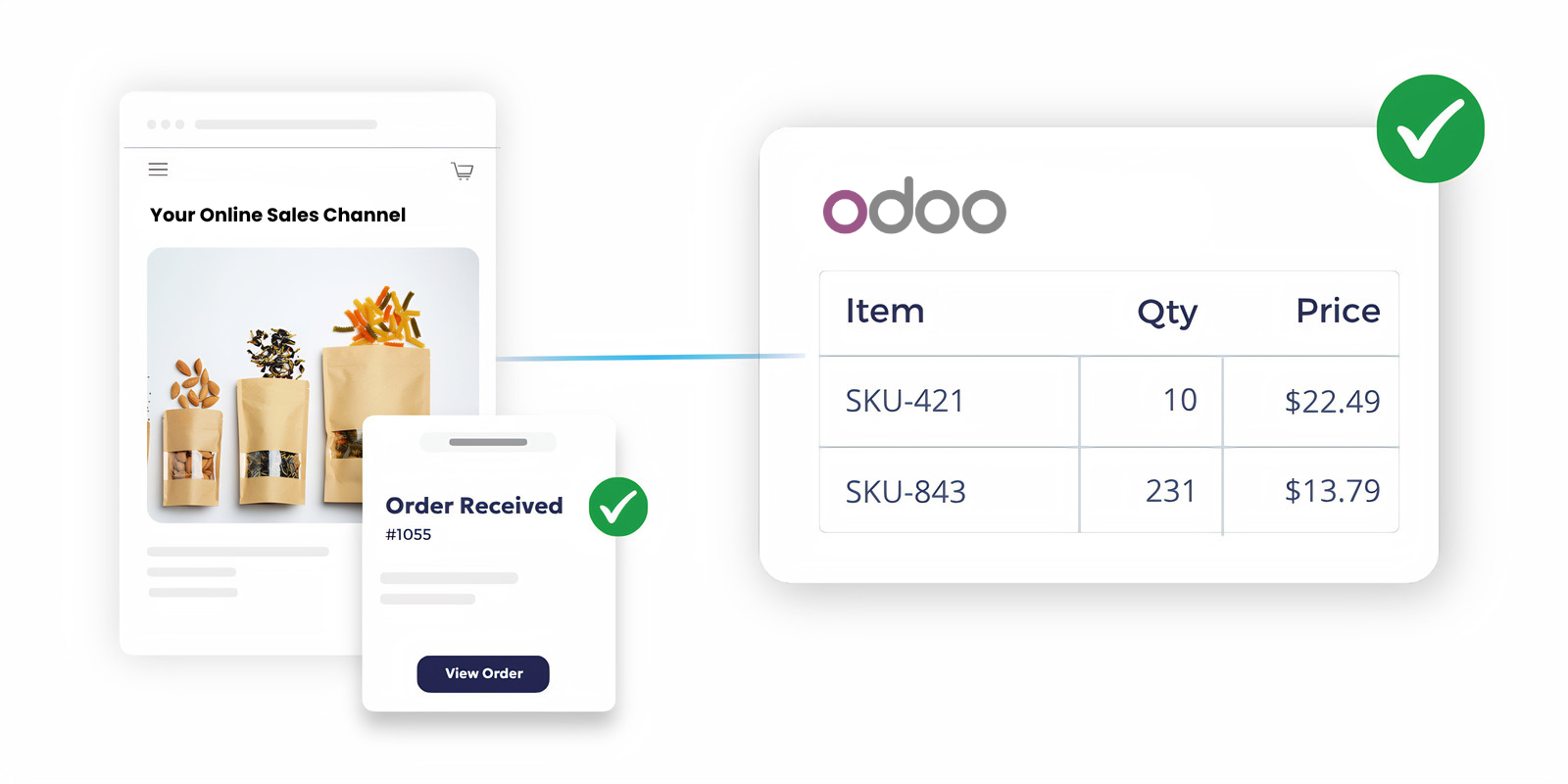
How OrderEase Connects Ecommerce Orders to Odoo


OrderEase receives order data from connected sales channels and brings it into one shared workflow.
Orders are collected
Items, customer details, pricing, shipping fields, and order attributes are structured into a consistent format.
Data is standardized
OrderEase applies channel rules, account logic, partner requirements, and workflow conditions.
Rules are applied
Transactions are directed to the right operational path based on customer, product, warehouse, or fulfillment rules.
Orders are routed
Clean order data is handed off into Odoo in the format your team needs.
Approved data moves to Odoo
Operations, fulfillment, and back-office teams receive more consistent order records with less cleanup required downstream.
Teams work from a stronger starting point
More ecommerce and channel
integrations you may be
interested in
Explore the integrations beyond ecommerce and see how OrderEase connects your channels and systems.




.svg.png?width=960&height=574&name=WooCommerce_logo_(2015).svg.png)






-1.png?width=127&height=114&name=Canadian%20Tire%20EDI%20logo%20(1)-1.png)
.png?width=200&height=200&name=Chewy%20EDI%20logo%20(1).png)

.png?width=200&height=200&name=Home%20Depot%20Logo%20(1).png)

.png?width=200&height=200&name=Sage%20logo%20(2).png)